How to Protect Wooden Furniture from Termites
FixixPk PKWooden furniture makes a home look warm, premium, and comfortable. However, if termites enter the wood, they can silently damage doors, cabinets, wardrobes, bed frames, and furniture before you notice the problem.
Termites usually work from inside the wood. That is why many people only discover the damage when the furniture becomes weak, sounds hollow, or starts leaving powder-like dust.
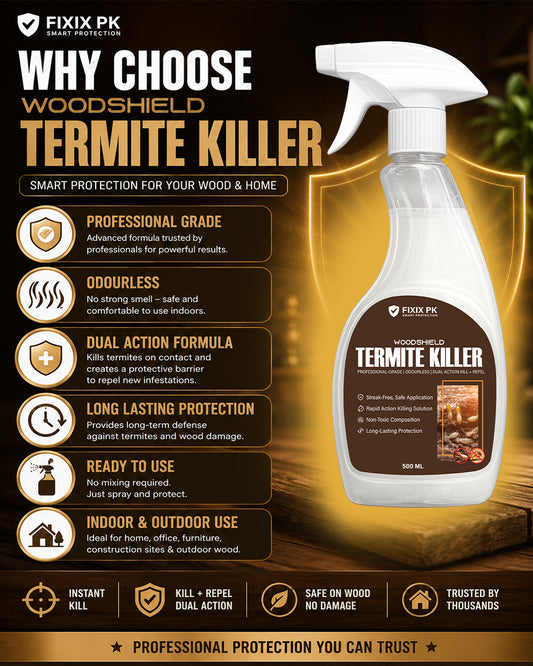
FIXIX PK WoodShield Termite Killer helps treat wooden surfaces and termite-prone areas by targeting cracks, joints, holes, and hidden spaces where termites commonly remain.
Why Wooden Furniture Gets Termites
Termites are attracted to wood, moisture, dark spaces, and areas with limited airflow. If wooden furniture is placed near damp walls or stored in closed rooms for a long time, the risk of termite activity can increase.
Common reasons termites attack wood include:
- Damp walls or water leakage
- Wooden furniture touching wet floors
- Poor ventilation
- Old cardboard boxes near furniture
- Closed storage rooms
- Untreated wooden items
- Cracks in furniture joints
- Humid weather conditions
Once termites enter the wood, they can slowly spread from one area to another.
Signs of Termite Damage in Wood
Check your wooden furniture regularly. Identifying the early signs can help prevent more serious damage.
Common signs include:
- Small holes in wooden furniture
- Powder-like dust near wooden surfaces
- A hollow sound when tapping furniture
- Weak or breaking corners
- Mud lines near walls or wooden areas
- Cracks in wooden joints
- Damaged door frames or cabinet edges
- Wooden surfaces becoming rough or soft
If you notice any of these signs, treat the affected area as soon as possible.
Wooden Areas That Need More Protection
Termites can attack almost any wooden item, but the following areas may need more attention:
- Wardrobes
- Bed frames
- Wooden doors
- Door frames
- Kitchen cabinets
- Wooden shelves
- Tables and chairs
- Dressing tables
- Storage boxes
- Wooden panels
- Furniture corners and joints
Hidden areas are especially important because termites usually remain inside dark cracks, joints, and covered spaces.
How to Use WoodShield Termite Killer on Furniture
Follow these steps for better treatment and protection:
1. Inspect the Furniture Properly
Check all sides of the furniture, especially back panels, lower corners, joints, and hidden sections. Look for holes, dust, cracks, mud lines, or weak wood.
2. Clean the Surface
Remove dust, loose wood powder, and dirt before spraying. This allows the product to reach the affected surface more effectively.
3. Shake the Bottle Well
Shake FIXIX PK WoodShield Termite Killer properly before use so the formula mixes evenly.
4. Spray the Affected Areas
Spray directly on termite holes, cracks, corners, wooden joints, and damaged areas. Apply a controlled amount to cover the affected spots.
Do not over-spray.
5. Use the Syringe for Deep Holes
If the pack includes a syringe, use it for small holes and deep cracks. This helps the liquid reach deeper inside the wood where termites may be hiding.
6. Let the Furniture Dry Completely
After application, leave the treated furniture to dry fully. Avoid touching or using the treated area until it is completely dry.
7. Repeat If Required
If the furniture is heavily affected, repeat the treatment after a few days if needed. Continue checking for fresh dust, new holes, or further damage.
Important Safety Tips
Use the product carefully and follow these precautions:
- Wear gloves while applying the product
- Keep children and pets away during application
- Use the product in a ventilated area
- Avoid direct contact with the skin and eyes
- Do not spray on food, utensils, clothes, or bedding
- Wash your hands after use
- Store the bottle in a cool and dry place
- Keep it away from direct sunlight
These precautions help you use the product properly and safely.
Extra Tips to Prevent Termites in Wooden Furniture
Along with using termite spray, these habits can help protect your furniture:
- Keep furniture away from damp walls
- Repair water leakage quickly
- Keep rooms properly ventilated
- Avoid storing cardboard near wooden furniture
- Clean storage areas regularly
- Keep wooden furniture dry
- Inspect hidden corners every few weeks
- Avoid placing wooden items directly on wet floors
- Treat early signs immediately
Preventing termite activity is usually easier and less expensive than repairing damaged furniture later.
When Should You Treat Wooden Furniture?
Consider treating wooden furniture when:
- You notice powder-like wood dust
- You see small holes in the wood
- The furniture sounds hollow
- Corners become weak or damaged
- You notice mud lines
- The furniture is placed near moisture
- You want preventive protection for termite-prone areas
Do not wait until the damage becomes clearly visible from the outside. Early treatment can provide better control.
Final Words
Termites can silently damage wooden furniture, doors, wardrobes, and cabinets. Regular inspection and early treatment can help protect your home from costly furniture damage.
FIXIX PK WoodShield Termite Killer is a practical solution for treating termite-affected wood and protecting termite-prone areas. Apply it carefully to cracks, holes, joints, and hidden spots for better results.
✅ FIXIX PK WoodShield Termite Killer - Smart Protection for Wooden Furniture.